

Start with your dog’s needs, find dependable spaces in your day, and decide what happens when plans change. Then try your routine for a week before adjusting it.
Start with your dog, then your calendar
Before choosing times, think about what your dog needs from a day outside. Their age, health, fitness and individual preferences all matter. If you are unsure how much exercise is suitable, ask your vet. PDSA’s exercise guidance
This plan helps you organise those needs around your day. It does not set a target for minutes, distance or number of walks. Include toilet breaks and any support your dog needs while you are out, rather than expecting one walk to cover everything.
Find the walking windows you can protect
Look at a normal weekday: waking up, leaving home, work, meals and bedtime. Where can you give a walk your attention without watching the clock the whole time? Write those windows down before choosing a route.
Be honest about the door-to-door time. Finding the leash, waiting for the lift, crossing a busy road and wiping muddy paws all belong in the plan. A route that takes half an hour outside may need a bigger space in your calendar.
If your available time cannot meet your dog’s needs, plan help. That might mean agreeing a walk with someone in your household, a trusted friend or a suitable dog walker. Name who is doing what, including the handover, so a busy day does not turn into an assumption.
Give each walk room to be a walk
You do not need a scenic destination for every outing. The streets around home, a nearby park and a familiar footpath can all have a place in your week. Choose routes that work for your dog and leave time for stops.
A plan built only around covering distance can make every pause feel like a delay. Make room for sniffing and exploring, too. PDSA includes slower, exploratory walks among the ways dogs can enjoy exercise. PDSA’s exercise guidance
Keep a couple of route options in mind: a familiar one for days when you need predictability, and another when you have more room in the day. Longer is not automatically the right choice. Pick for the dog, the conditions and the time you actually have.
Make a weekend version and a backup
A weekend can have a different rhythm without becoming a completely different plan. Keep the care your dog relies on covered, then decide where there is room for something else: an unhurried neighbourhood walk, time at a suitable dog park, or a trail you have prepared for.
A longer weekend outing is not a way to make up for unmet needs during the week. If you are introducing more activity, build it gradually and keep it appropriate for your dog. PDSA’s exercise guidance
Write the backup while the day is still going well. Who can help if work runs late? Which route avoids the roadworks? What changes if conditions make your usual outing unsuitable? A backup should still account for your dog’s needs; it is not simply the shortest option.
For a first trail outing, use our first-hike planning and packing checklist.
Your weekday-and-weekend walking plan
Fill this in around the needs of your own dog. Add as many walking windows and toilet breaks as they need; the spaces below are prompts, not a prescribed schedule. You can print your notes or copy the plan into a notebook.
Review the plan after a week
Keep a short note after outings: when you left, where you went and anything that made the walk easier or harder to fit in. “Too rushed before work” or “quieter after the school run” is enough to give next week’s plan something useful to work with.
At the end of the week, change one part that kept causing friction. Move a walking window, leave more getting-ready time or make the handover clearer. Keep the parts that worked. If your dog is struggling with walks or their behaviour or comfort changes, speak to your vet rather than treating it as a scheduling problem.
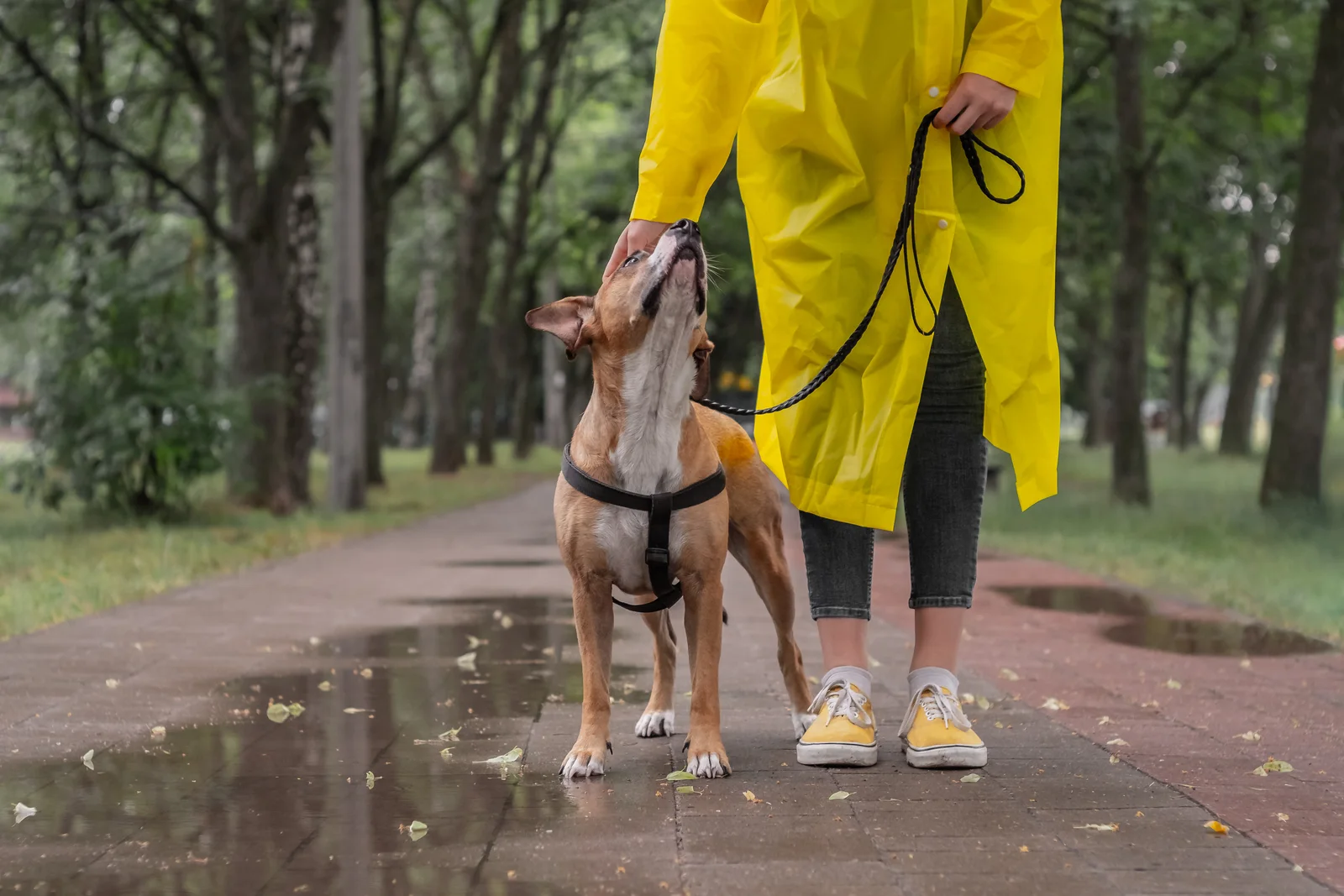
A routine earns its place by helping you care for your dog through an ordinary week. There is room for the rainy pavement, the familiar loop and the occasional new path.
Back to top ↑